
































Deanva
Web DeveloperExperience Family Medical practitioner with over 25 years of practical experience consulting for families on mental health, psychological issues and how best to handle stress.
Free
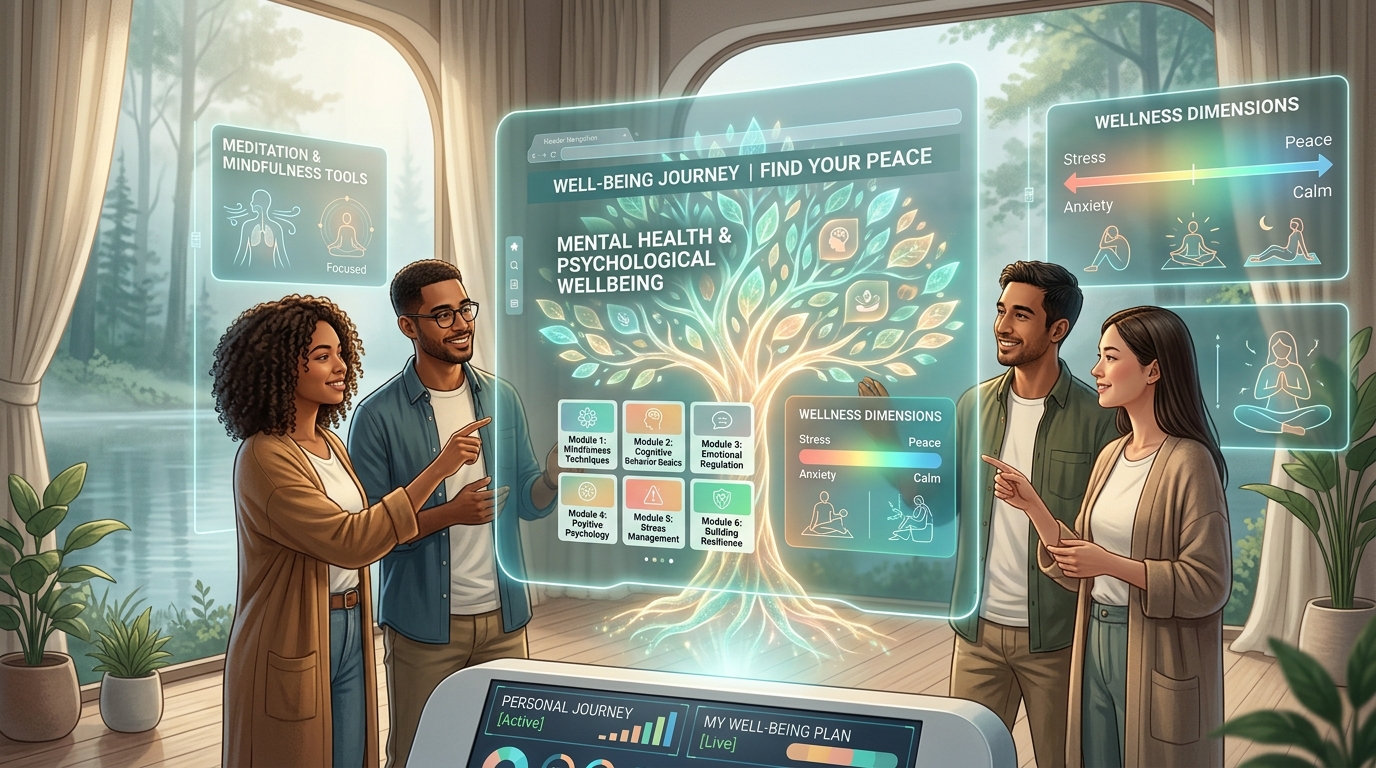
Mental Health & Psychological Wellbeing is a practical awareness course designed to help participants better understand their mental and emotional wellbeing, recognise common signs of psychological distress, and develop healthier ways of responding to life's challenges. The course explores five essential areas: understanding mental health, managing stress, recognising depression and anxiety, breaking the stigma surrounding mental-health challenges, and overcoming delayed help-seeking. Through practical discussions, real-life scenarios, self-reflection activities and interactive exercises, participants learn how to recognise when they or someone they care about may be struggling and how to respond with empathy and appropriate support. The course emphasises that mental health is an important part of overall health, that experiencing emotional difficulties is not a sign of weakness, and that seeking appropriate professional help is a responsible step toward recovery and wellbeing.
Mental Health & Psychological Wellbeing is a practical and engaging awareness course designed to help participants develop a better understanding of their mental and emotional wellbeing and become more confident in recognising, discussing and responding appropriately to mental-health challenges.
The course addresses an important reality: mental health is an essential part of overall health, yet many people still struggle in silence because of stigma, misinformation, fear, shame, cultural misconceptions or uncertainty about where to seek help. As a result, stress may go unmanaged, symptoms of depression and anxiety may be overlooked, and people may delay seeking appropriate support until their difficulties become more serious.
This course provides a safe, accessible and non-judgmental learning environment where participants can explore these issues openly and practically.
The purpose of the course is not to diagnose mental-health conditions or replace professional treatment. Rather, it is designed to improve mental-health literacy, encourage healthy psychological wellbeing, reduce harmful stigma and help participants recognise when professional support may be appropriate.
Participants will learn how to understand their own emotional responses, recognise signs of significant distress, support others with empathy and make informed decisions about seeking appropriate help.
The course is particularly suitable for young people, adults, employees, educators, parents, community leaders, religious organisations, students, civil servants, workplaces, schools and community groups seeking to improve mental-health awareness.
The course is organised around five interconnected areas that take learners on a journey from understanding mental health to taking positive action.
Participants begin by exploring what mental health and psychological wellbeing mean and why mental health deserves the same attention as physical health.
They examine factors that can influence wellbeing, including relationships, financial pressure, work, family circumstances, social isolation, major life changes and other sources of psychological pressure.
Participants also confront common myths and misconceptions about mental illness and learn why mental-health difficulties should not automatically be interpreted as weakness, failure or lack of faith.
Stress is a normal part of life, but persistent or overwhelming stress can affect emotional wellbeing, relationships, productivity, physical health and quality of life.
Participants learn to identify:
Through a Personal Stress Map and Wellbeing Journal, participants reflect on their own experiences and develop practical strategies for managing stress more effectively.
This section introduces participants to depression and anxiety in simple, understandable language.
Participants explore the difference between ordinary temporary sadness or worry and persistent difficulties that may warrant professional attention.
They learn about possible signs such as:
Importantly, participants are taught to recognise possible warning signs without attempting to diagnose themselves or others.
Through realistic case studies and scenario-based activities, learners practise responding appropriately to someone who may be experiencing psychological distress.
Stigma is one of the major barriers to open conversations about mental health and can contribute to people hiding their difficulties or avoiding support.
This section examines how stigma develops and how it can affect individuals, families, workplaces and communities.
Participants explore:
They also learn how to replace judgement with empathy and how to communicate with someone experiencing emotional or psychological difficulties.
The emphasis is on creating a culture where people can say:
“I am struggling”
without immediately being labelled, ridiculed or rejected.
Recognising a problem is only the beginning. The final section addresses one of the most important questions:
“What should I do when I or someone I care about is struggling?”
Participants explore why people delay seeking help, including:
They learn when professional support may be appropriate and how to approach a healthcare or mental-health professional.
Participants also learn a simple framework for supporting someone:
The course also introduces basic crisis-awareness principles and emphasises that serious or immediate safety concerns require urgent professional or emergency assistance, rather than relying solely on friends, family or an online course.
The course is designed to be interactive rather than lecture-based.
Participants will learn through:
This approach allows learners not only to understand mental-health concepts but also to apply what they learn to real-life situations.
By the end of the course, participants should be able to:
The course culminates in the development of a:
Each participant identifies:
This ensures that participants leave with something practical they can use beyond the classroom.
The course takes participants through five stages:
Learn what mental health really means.
↓
Identify stress, anxiety, depression and signs of psychological distress.
↓
Develop healthier coping strategies and learn how to respond appropriately.
↓
Replace stigma and judgement with empathy, understanding and constructive support.
↓
Know when and how to connect yourself or someone else with appropriate professional assistance.
At the heart of Mental Health & Psychological Wellbeing is a simple principle:
“Mental health is health, and taking care of your mind is an essential part of taking care of your life.”
The course does not encourage participants to diagnose themselves or others, nor does it suggest that positive thinking alone can resolve serious mental-health difficulties. Instead, it promotes awareness, prevention, healthy coping, compassion, early recognition and appropriate professional support.
Ultimately, the course seeks to create individuals and communities that are better equipped to talk about mental health, recognise when someone may be struggling, respond without harmful judgement and encourage timely access to appropriate care.
Understand your mind. Manage your stress. Recognise the signs. Break the stigma. Support one another. Seek help when you need it.
Experience Family Medical practitioner with over 25 years of practical experience consulting for families on mental health, psychological issues and how best to handle stress.